The quarter at a glance:
- stSLX went live. Solstice's liquid staking token launched in May on GLAM vault infrastructure, with yield trading on Exponent.
- The integration layer expanded. New staging integrations added credit, trading, liquidity, rate, and lending primitives across six Solana protocols.
- Vault controls tightened. Stricter asset allowlists, fee caps, subscription safeguards, and optional reference NAV checks at execution.
- Security posture strengthened. GLAM joined STRIDE, Asymmetric Research's Solana security maturity program.
stSLX Launched
In May, stSLX launched as part of the Solstice ecosystem. stSLX is the liquid staking token received when SLX is staked into the Solstice staking vault, and it is listed for yield trading on Exponent, opening fixed return, leveraged yield, and liquidity workflows around the asset.
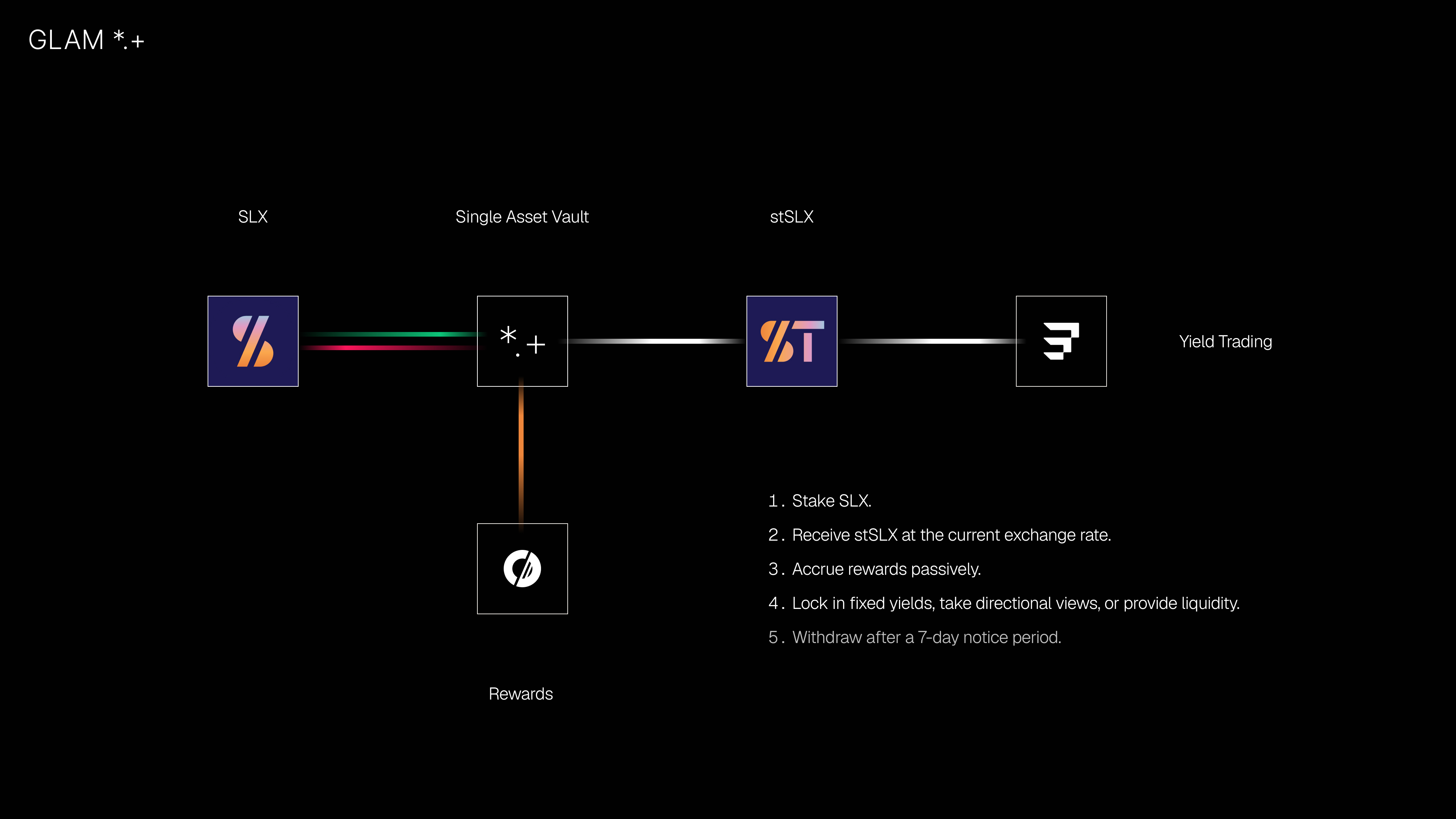
A token on its own is not a product. Managers need controls around subscriptions, redemptions, pricing, allowed assets, delegation, and reporting. That operational layer is what GLAM provides, and stSLX now runs on it in production.
The Integration Layer Expanded
New staging integrations add credit, trading, liquidity, rate, and lending primitives across Loopscale, Phoenix, Orca, Exponent, Project 0 / Marginfi, and Jupiter Lend. These have not completed audit review: they are available for validation, feedback, and strategy development, not production use.
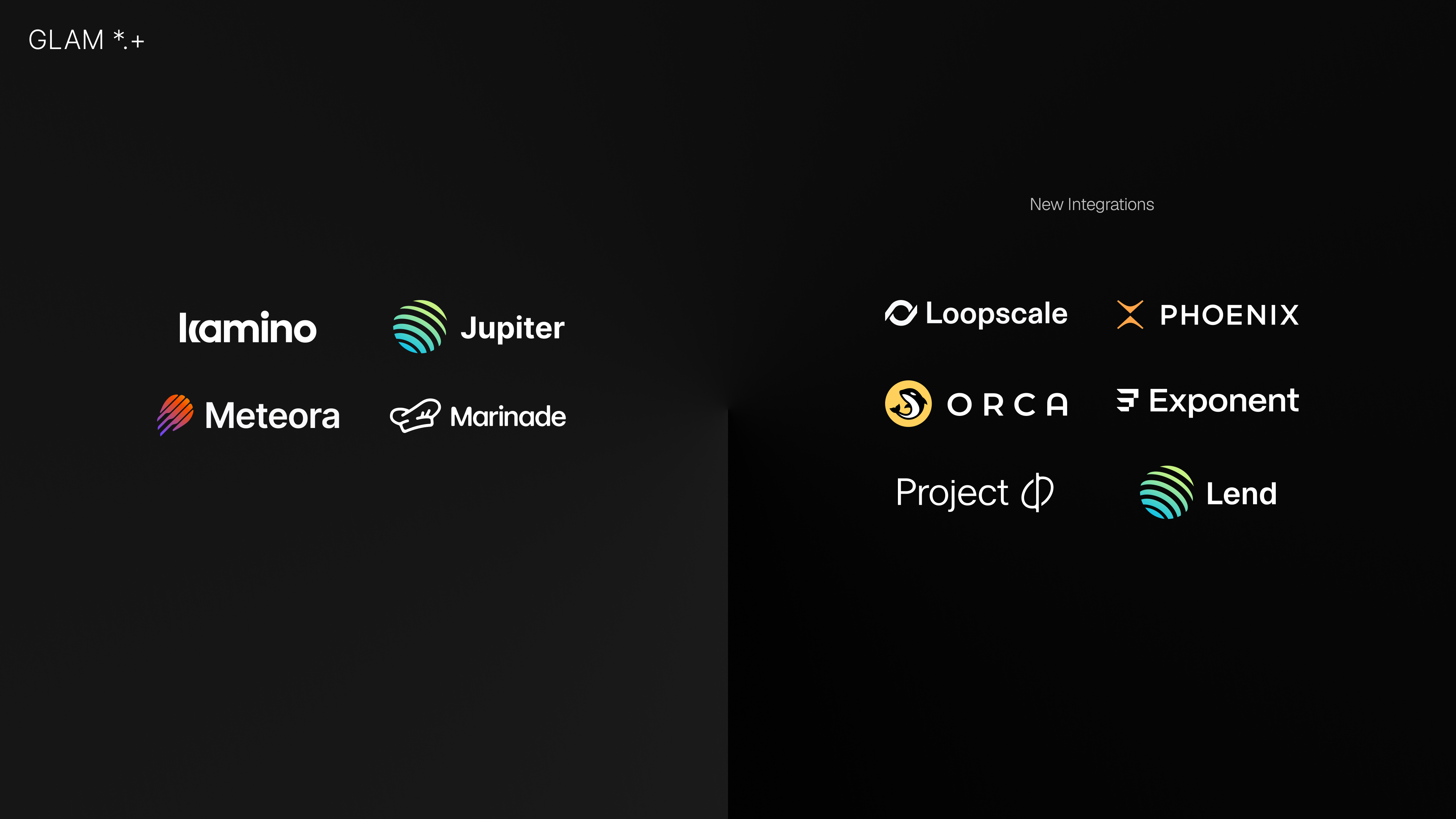
Institutional portfolios are not built from a single yield source, and each venue introduces its own operational surface. GLAM makes that surface manageable inside a vault: approved protocols, restricted assets, scoped delegate permissions, one policy and reporting framework. A manager can reason about a vault as a mandate rather than a collection of unrelated transactions.
Platform Controls Hardened
Vault controls got stricter across the board. Changes to a vault's list of approved assets now run through automatic safety checks: a vault's core asset can't be removed, an asset has to be fully exited before it comes off the list, and changes can be set to take effect only after a waiting period. Fees now have hard caps, at both the protocol level and the individual vault level. If queued investor requests sit unprocessed past their promised settlement window, the vault automatically pauses new deposits. And before shares are issued or paid out, managers can add a final check of the price against an independent reference value.
The SDK and CLI improved alongside: more consistent policy interfaces, session level caching for lookup tables, and timeout handling that keeps slow RPC calls from blocking operator workflows.
Strengthening the security posture
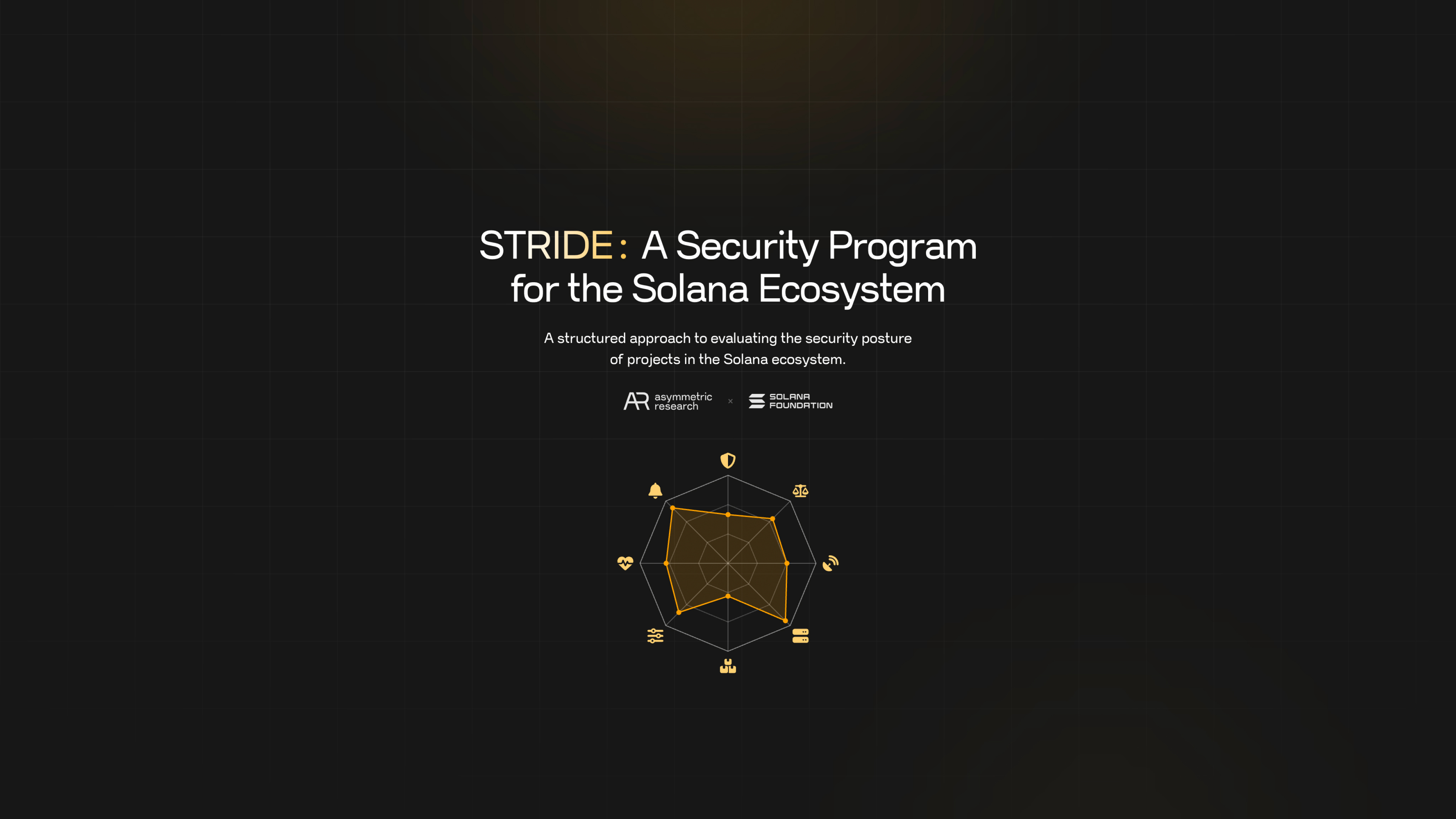
GLAM joined STRIDE, Asymmetric Research's Solana security maturity program, with the evaluation completing in Q3. The program measures security beyond program audits: operational controls, monitoring, escalation paths, and incident response alongside protocol design and release processes. Membership includes access to SIRN, a rapid incident response network, for direct escalation if an incident occurs. Asymmetric Research's State of Solana Security covers the program's first findings.
Published in Q2
Four essays on onchain asset management and tokenized vault infrastructure:
- Expanding the GLAM Universe
- Liquid Staking with Institutional Grade Controls
- Bringing the Solana Vault Standard to Life
- A Solana Vault to Tokenize the World
The recurring argument: vaults are becoming programmable operating environments for product creation, strategy execution, risk controls, and distribution.
Looking Ahead
Q2 reinforced the thesis: tokenized investment products need one operating layer that coordinates policies, permissions, integrations, pricing, and reporting. In Q3, the focus is making GLAM easier to adopt and harder to misuse: more reliable vault operations, clearer reporting surfaces, continued security maturity work, and a broader set of strategy primitives.